Complete
4.5 ha basin
Deep-water marine works
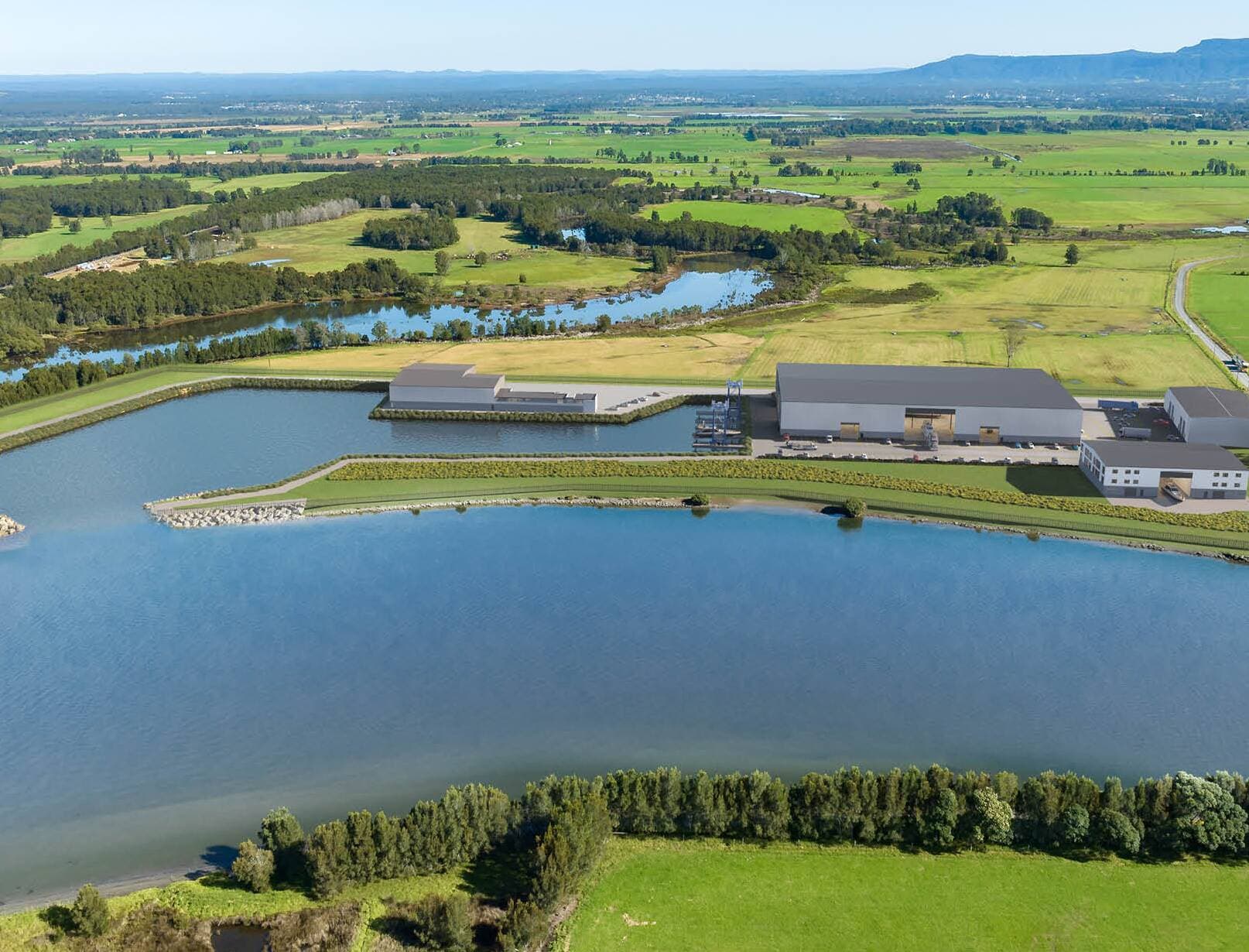
The excavated basin, broad entrance and access channel form the physical core of ECMC. They separate vessel movement from the open river and create room for controlled service activity.
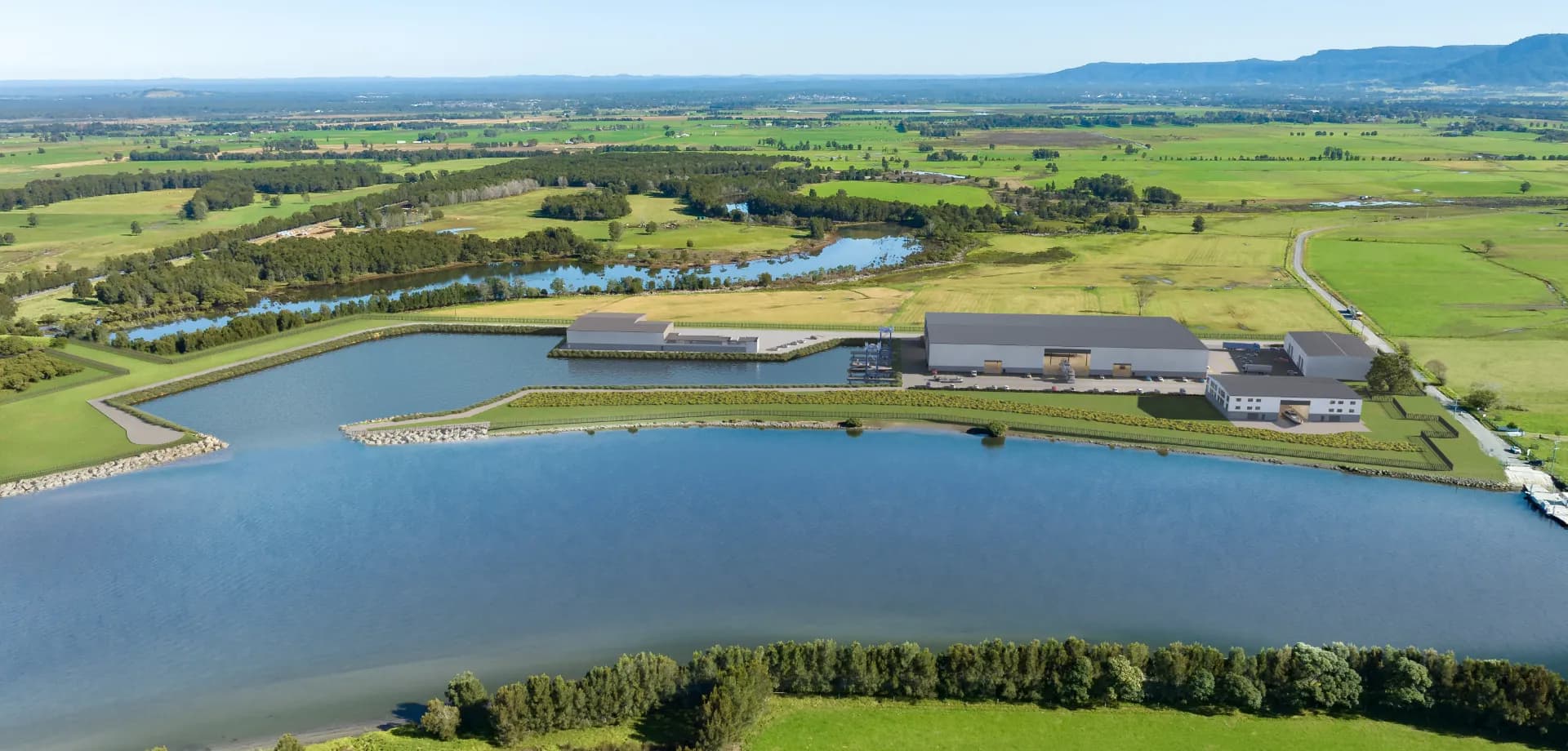
Numbaa, Shoalhaven, New South Wales
East Coast Marine Centre combines a 4.5-hectare basin, large-vessel access and a working waterfront designed for refit, repair and marine technology.
45,000 m²
Protected basin water
Complete
10 m LAT
Depth within the basin
Complete
5 m LAT
Purpose-built access channel
Complete
50 m
Basin entrance width
Complete
1,000 LM
Additional water frontage
Site asset
1,000T+
Heavy-lift system
Planned
What ECMC actually is
ECMC is located at 1178 Comerong Island Road, Numbaa, on Berry's Canal within the Lower Shoalhaven River system. Its purpose is not simply to store boats. It is to bring large vessels into protected water, move them safely to shore and give specialist teams the space to complete substantial work.
Depth, entrance width, working room, lift capacity, hardstand and covered workshops are planned as one connected vessel-service system.
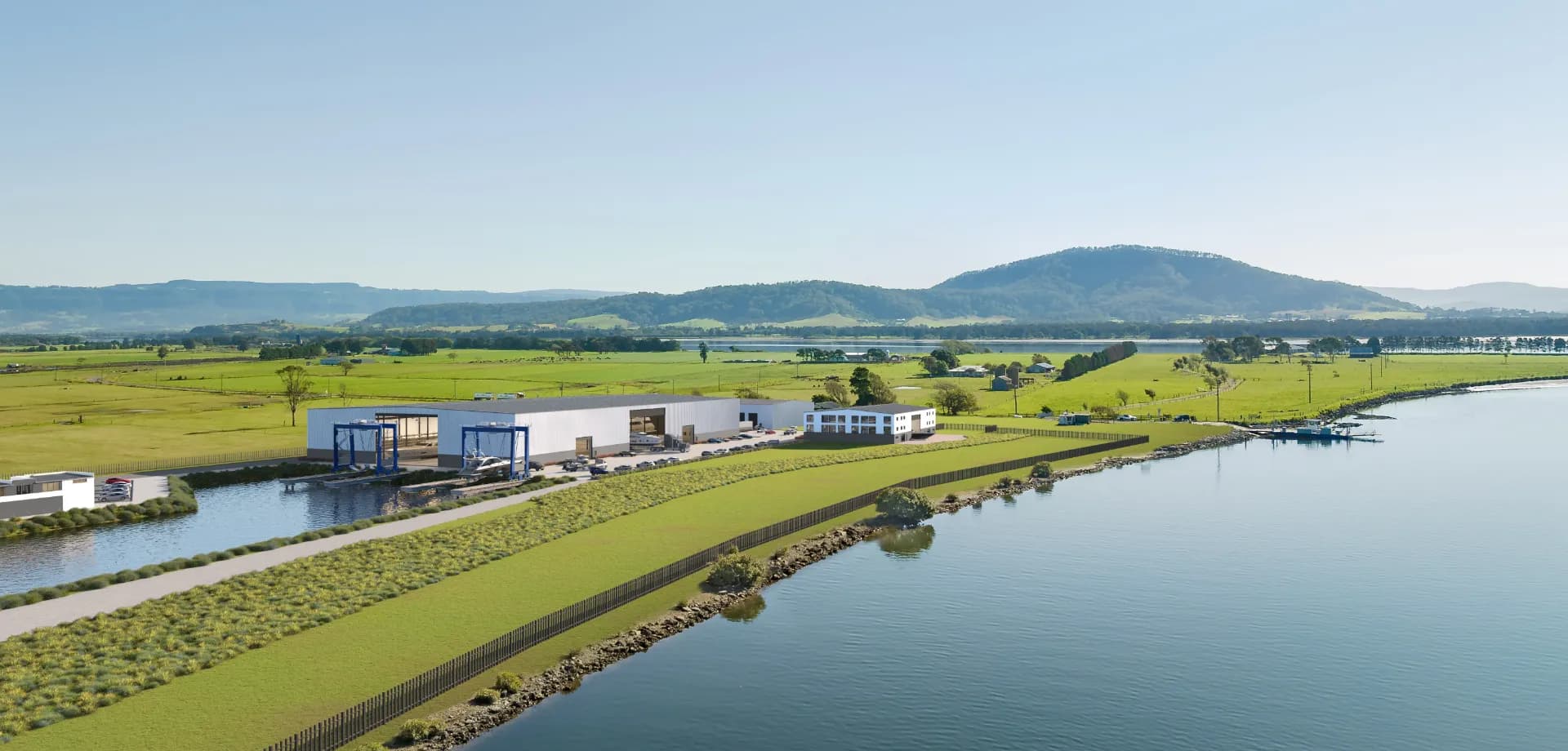
Water depths are stated relative to Lowest Astronomical Tide (LAT). Vessel entry depends on draft, displacement, under-keel clearance, tide, weather and operating procedures.
From ocean to workshop
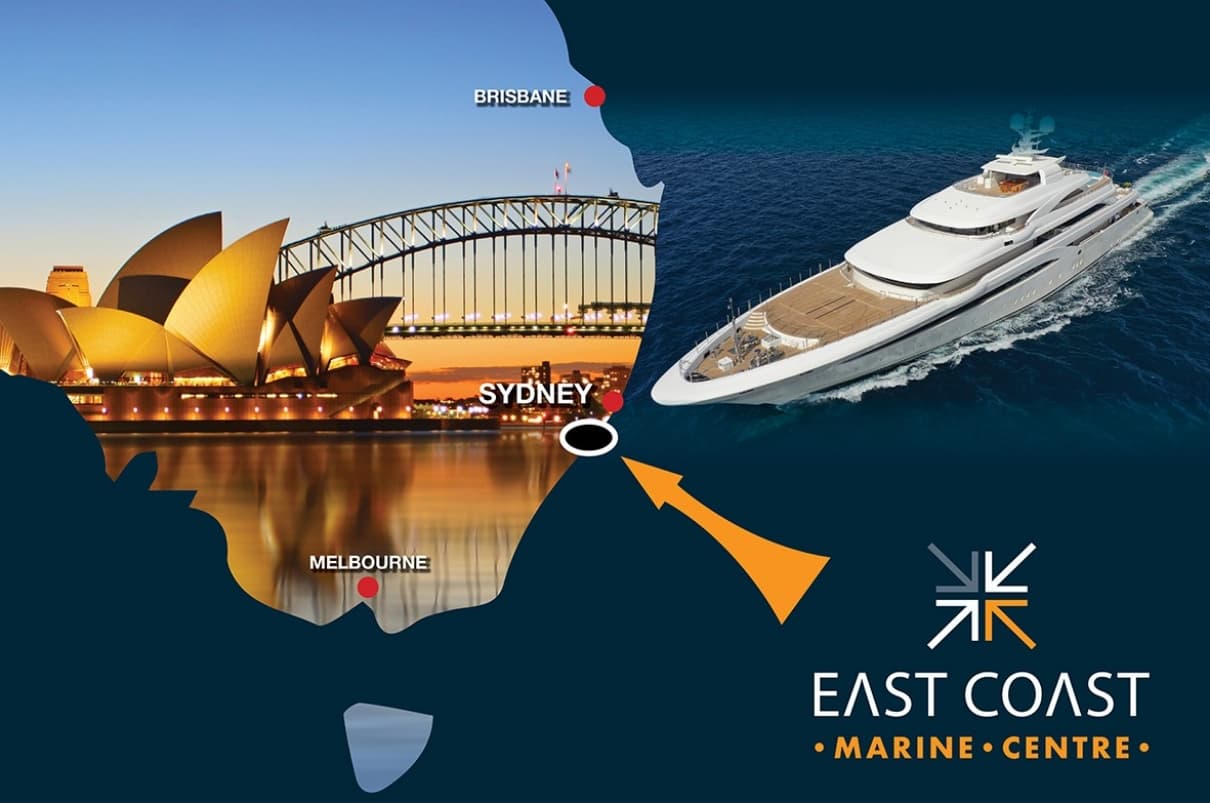
The access sequence is the marina's core piece of infrastructure. Each stage removes a constraint between open water and shoreside service.
01
Approach the south coast through Crookhaven Heads.
02
Navigate the Crookhaven River toward Berry's Canal.
03
Enter the purpose-built channel, stated at 5 metres LAT.
04
Pass through the 50-metre-wide opening into protected water.
05
Manoeuvre within 4.5 hectares of basin water at 10 metres LAT.
06
Transfer to wet service, hardstand or covered workshops as capability is delivered.
This is a geographic overview, not a navigation instruction. Vessel movements require current charts, local operating procedures and an individual suitability assessment.
Facilities, one by one
The status labels make a deliberate distinction between what exists now, what has approval and what remains part of the planned operating configuration.
Complete
4.5 ha basin
The excavated basin, broad entrance and access channel form the physical core of ECMC. They separate vessel movement from the open river and create room for controlled service activity.
Earlier public concept
13 berths
A publicly marketed 2023 layout described 13 floating pontoon berths for vessels from 10 to 50 metres. The final operating berth schedule should be read alongside the newer 30 to 100 metre service vision.
Approved
20,000 m²
Four trade-specific buildings are described in the project approvals, giving large projects weather protection and room for engineering, fabrication, systems, coatings and fit-out work.
Approved
3 hectares
Open working area beside the marine facilities supports vessel staging, equipment movement, contractor access and parallel maintenance programs.
Planned
1,000T+
The planned marine straddle carrier is intended to move vessels between water, hardstand and workshops. Capacity depends on displacement, hull geometry and lifting configuration, not length alone.
Reserved
2.5 ha
The South Yard reserve allows later marine, technology and dual-use requirements to be accommodated without crowding the main working precinct.
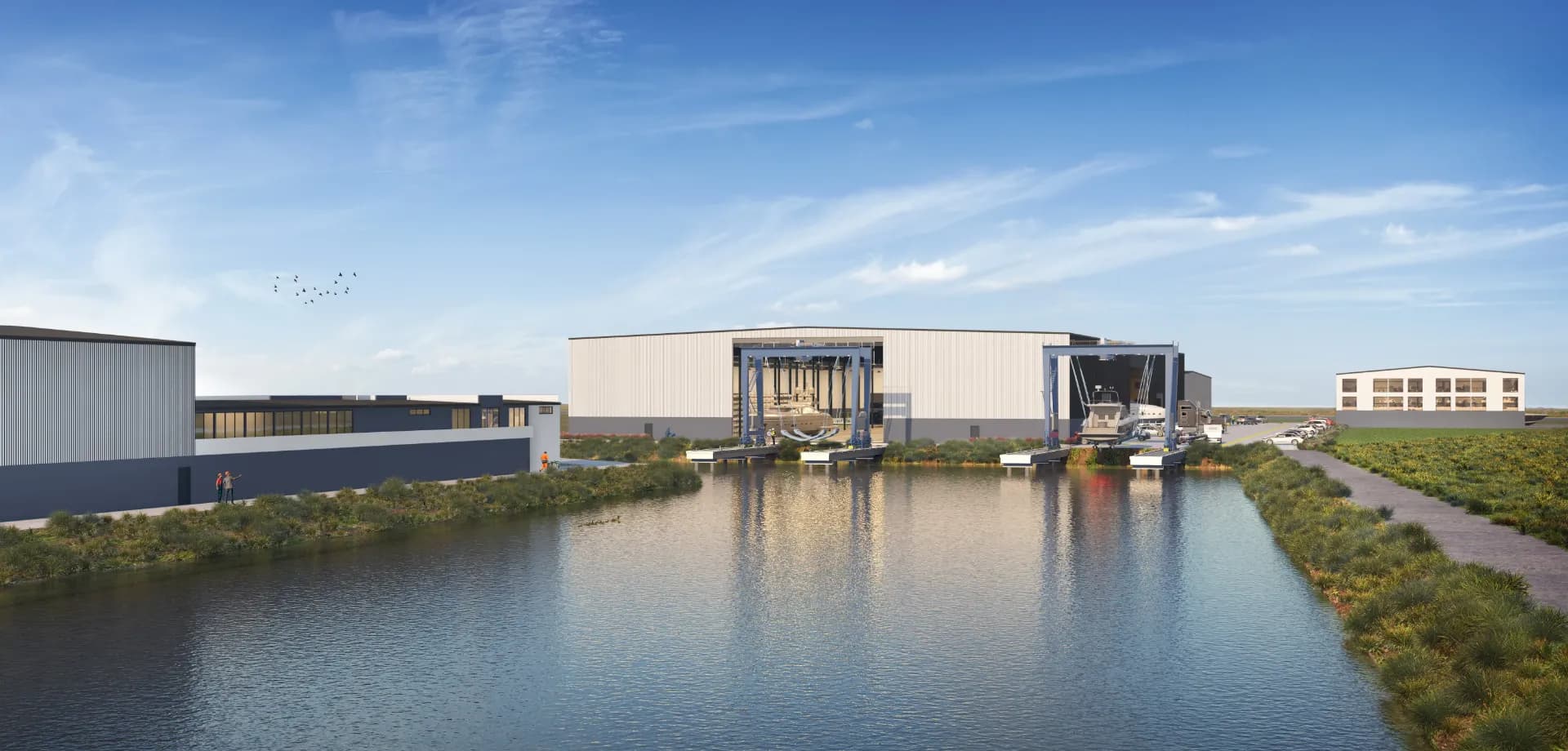
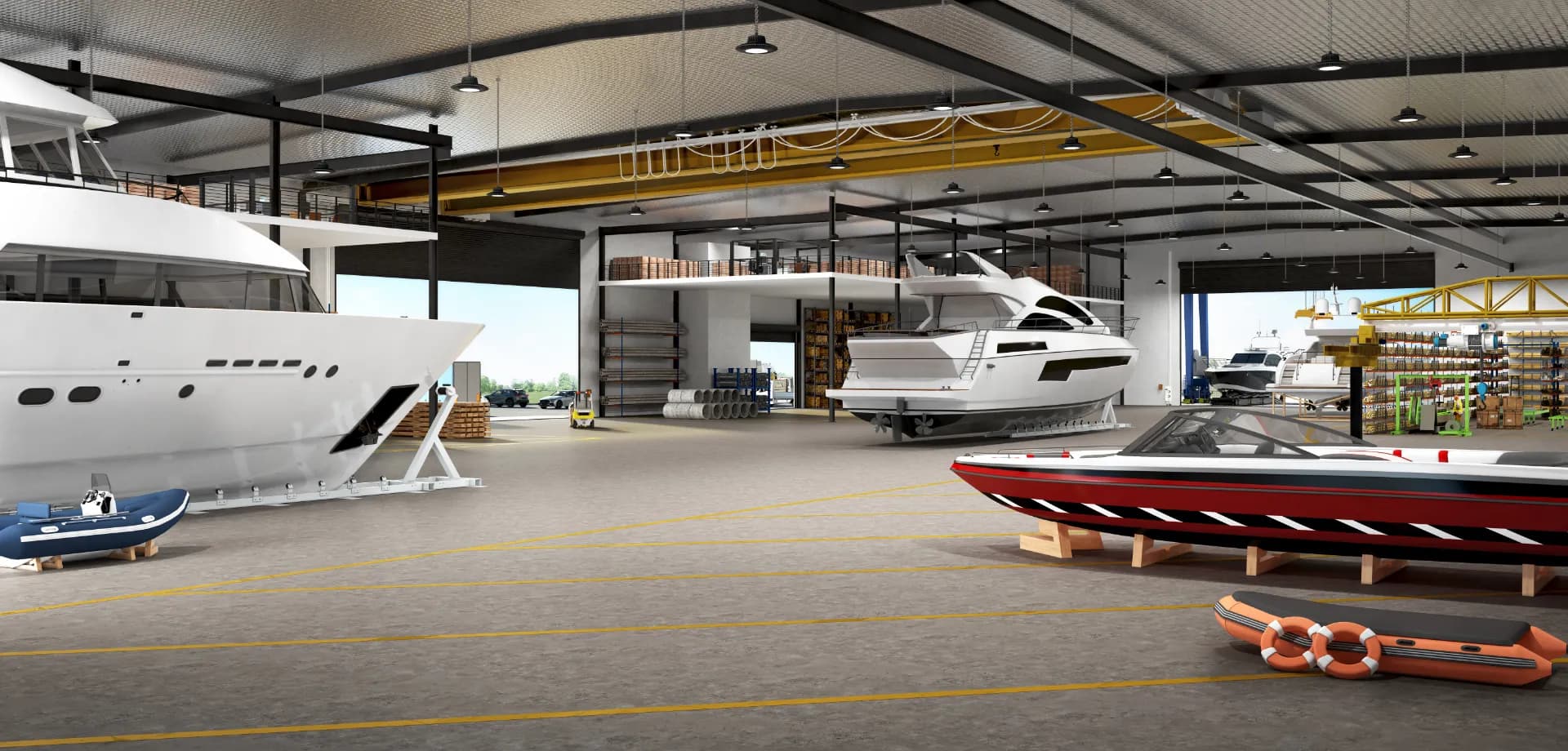
Planned facility
Waterside handling
Planned vessel transfer between basin, lifting equipment and covered service areas.
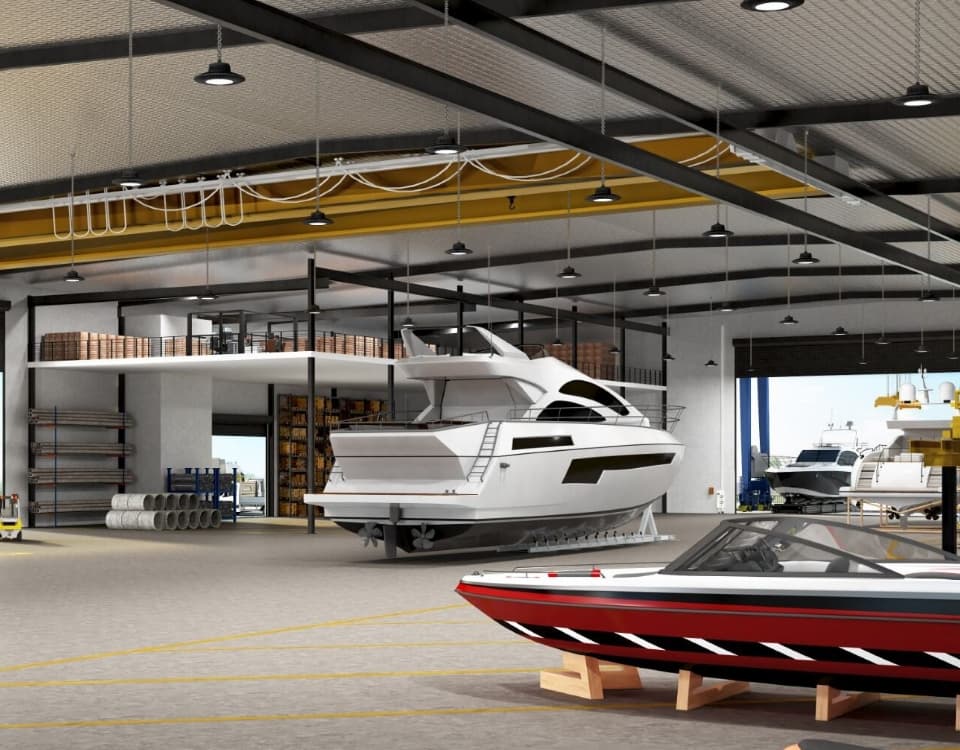
Planned facility
Covered marine work
Planned workshops for protected refit, repair, engineering and fit-out programs.
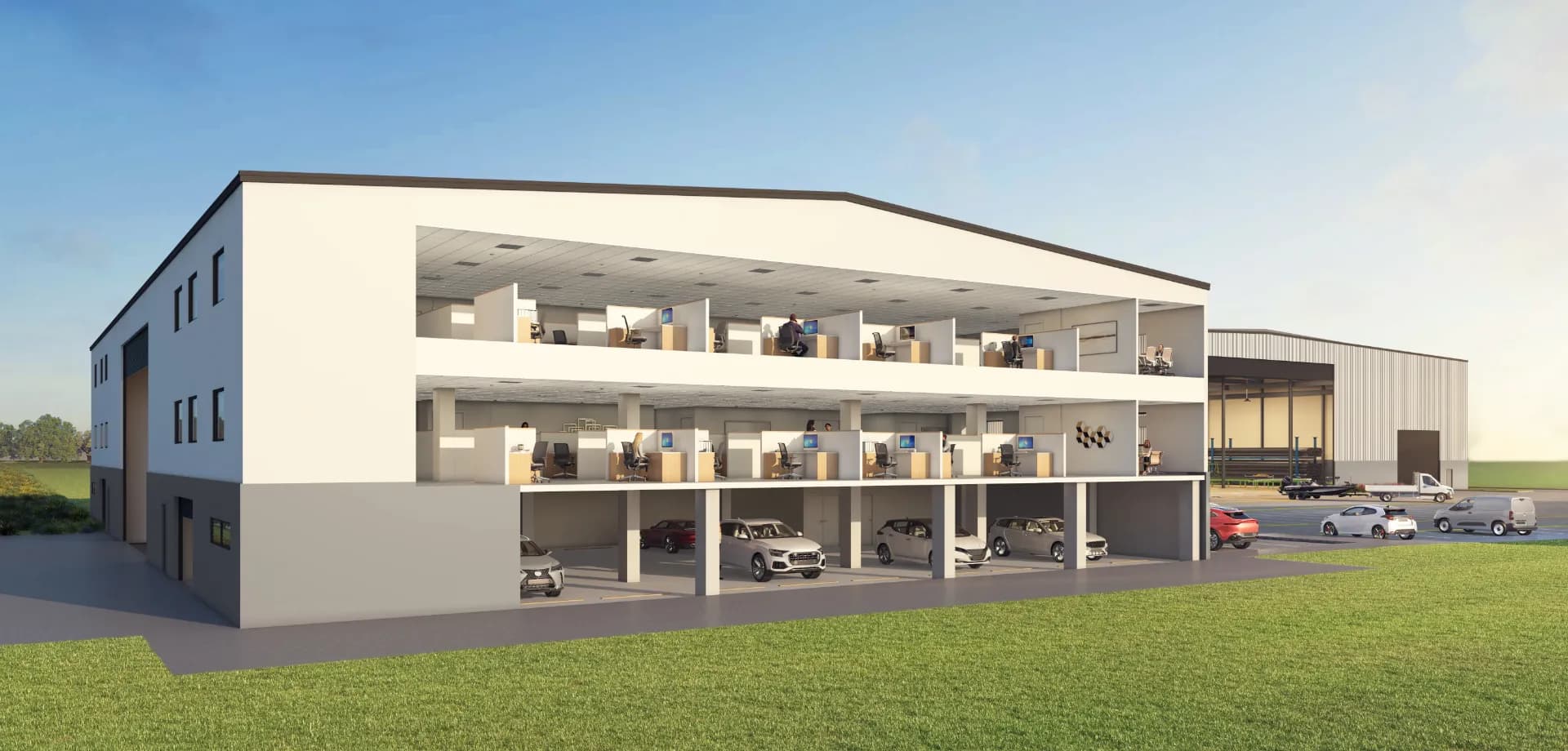
Planned facility
Trade and project base
Planned offices and operational space supporting owners, crews, contractors and project teams.
What can the marina support?
ECMC's current project vision targets vessels from 30 to 100 metres and a service gap above 60 metres and 600 tonnes. A planned 1,000-tonne-plus lift widens that envelope, but no yard should accept a vessel on length alone.
Vessels and users
01
Refit, survey, repair and maintenance programs for the 30–100 metre market targeted by ECMC.
02
Tugs, ferries, charter vessels and other working craft requiring planned maintenance or repair.
03
Patrol, emergency and agency vessels that benefit from secure access and coordinated specialist trades.
04
Support craft, autonomous systems and maritime technology work near the Shoalhaven's established naval ecosystem.
05
Specialist vessels whose dimensions, displacement and work scope fit the completed operating capability.
06
A waterside setting for integration, testing and sustainment of new systems and advanced manufacturing.
These are intended user groups, not a statement that the full planned capability is currently available. Vessel acceptance is subject to the delivered equipment and an individual technical assessment.
Why this site is unusual
45,000 square metres of protected water gives the yard room to organise arrival, manoeuvring and service activity.
Approved hardstand and workshops sit with the basin, avoiding the disconnect common at constrained urban waterfronts.
Council records identify the property as RU1 land with site-specific marine use history, including boat building, repairs and mooring facilities.
Council approved DA20/1970 in 2021 for an industrial boat-building and repair building, including the height needed for large vessels and a gantry crane.
Project materials describe freehold land and fee-simple submerged land under Torrens Title, plus about 1,000 linear metres of additional frontage.
70 NM
South of Sydney by sea
Numbaa
Berry's Canal, Shoalhaven
Why the location matters

The Shoalhaven has a strong base of practical trades, engineering and advanced-manufacturing capability.
HMAS Albatross is Australia's sole Royal Australian Navy air station, while HMAS Creswell anchors naval training near Jervis Bay.
The NSW south coast sits naturally between Sydney, the wider Pacific cruising grounds, New Zealand and onward southern routes.
Beaches, national parks, coastal towns, food and services make an extended maintenance period easier for captains and crews.
Explore ECMC